Facebook Ads vs Google Ads for a Small Business: Interest vs Intent, and When to Run Both

If you own a small business and have money for one ad platform, the question is usually Facebook or Google, and almost every comparison online ends with "it depends." That's true, but it doesn't help much when you're the one paying for the ads, so this guide gives you a decision rule and a four-question worksheet to score your own business.
The right first channel depends on how urgent the job is, local search volume, video, budget and how fast you follow up.
One thing to know up front is that Acquirely is a Meta-focused growth partner. Our team runs Facebook and Instagram ads for owners across Canada and the US, and we don't run Google Ads, so weigh what you read here with that bias in mind. We'll say plainly when Google is the better place to start, and every number here comes from our own Facebook accounts.
What is the difference between Facebook ads and Google ads?
Google ads capture intent, and Facebook ads create interest. When someone types "window cleaning near me" into Google, they've already decided they want the job done, and a Search ad or a Local Services Ad puts your business at the top of the list they're reading. When someone scrolls Instagram, they weren't thinking about their windows at all, and a good video ad makes them realize the job is worth doing and that you're the one to call.
Both work, on different people at different moments. Google only reaches people who are already searching, so your opportunity is capped by how many people in your area search for your service each day. Facebook can reach almost every homeowner in your service radius, but most of them aren't ready yet, so the ad has to show the result, explain the offer and give them a reason to act now.
Think of it as a phone book next to a flyer: people open the phone book when something is already broken, while a flyer tells them about a job they hadn't thought of yet, and Facebook is a flyer you can aim at the right neighbourhoods.
How do Facebook ads and Google ads compare for contractors and local businesses?
The two differ most in who they reach, how you pay and what creative you need. The Facebook column reflects the accounts our team manages, and the Google column is based on how Google describes its own products.
| Factor | Facebook and Instagram | Google Search |
|---|---|---|
| Who sees the ad | Local people scrolling their feed who aren't looking for you yet | People typing a search because they want the job done |
| Jobs it suits best | Planned, visual work: decks, painting, exterior cleaning, renovations | Urgent work people search for by name: no heat, burst pipes, lockouts |
| How you pay | Lead campaigns are usually charged by impressions; ours averaged about $18 per 1,000 impressions (CAD, blended, February 9 to July 6, 2026) | Search ads charge per click; Local Services Ads charge per lead |
| Cost per lead | The typical account paid about $21 per lead (CAD, median of 28 accounts, February 9 to July 6, 2026) | No Google data of our own; Google's planning tools can estimate it for your area |
| Creative you need | Video works best, ideally you or your crew on camera | Short text ads, plus a Google Business Profile with good reviews |
| How leads arrive | Mostly form fills from people earlier in their decision, who need a fast call back | Often phone calls from people ready to book soon |
Facebook figures: Meta Ads Manager exports from our accounts. Google rows describe how Google says its products work.
Google Search ads charge when someone clicks, and Google Ads Help explains cost per click. Local Services Ads charge per lead instead, and Google's Local Services Ads guide for Canada says you pay only for leads related to your business. On Facebook, cost per lead depends on how many viewers fill out the form, which is why creative matters so much (the Meta Business Help Centre covers billing).
When should a small business choose Google ads first?
Google is the better first channel when the customer needs help now and already knows what to search for. If your phone rings because something broke, you want to be the first name they see, and no Facebook ad can sit in that spot as reliably as a search result.
Choose Google first if:
- The job is urgent. A burst pipe, no heat in January or a flooded basement sends people straight to a search bar, and they call whoever answers first.
- Lots of people in your area already search for your service by name. The Keyword Planner inside Google Ads gives you a rough idea of search volume for your town.
- Your trade qualifies for Google Local Services Ads where you work, and you'd rather pay per lead than per click.
- The work isn't visual, or you can't make video. A drain cleaning rarely makes a before and after that stops anyone scrolling.
- Someone answers the phone live during business hours, because many Google leads arrive as calls.
- Your Google Business Profile already has a healthy number of good reviews.
If most of that describes you, start with Google, then add Facebook later for the planned work you sell.
When should a small business choose Facebook ads first?
Facebook and Instagram are the better first channel when the job is planned, visual and rarely searched. Nobody needs their deck stained by noon, but plenty of homeowners will book it after a good video shows them what their deck could look like. This is where Facebook ads for contractors tend to earn their keep.
Choose Facebook first if:
- The job is planned and visual. Decks, painting, exterior cleaning, window cleaning, patio restoration, landscaping and renovations all show well in a short phone video.
- Few people search for it, or homeowners don't know it exists. Most people only realize they want their interlock sealed after they see a before and after.
- You work in a smaller town or a spread-out area where few people search but plenty of homeowners fit.
- You'll get on camera. In our accounts, a real person talking to the camera has repeatedly done well for local home services, because homeowners feel like they're hiring a person.
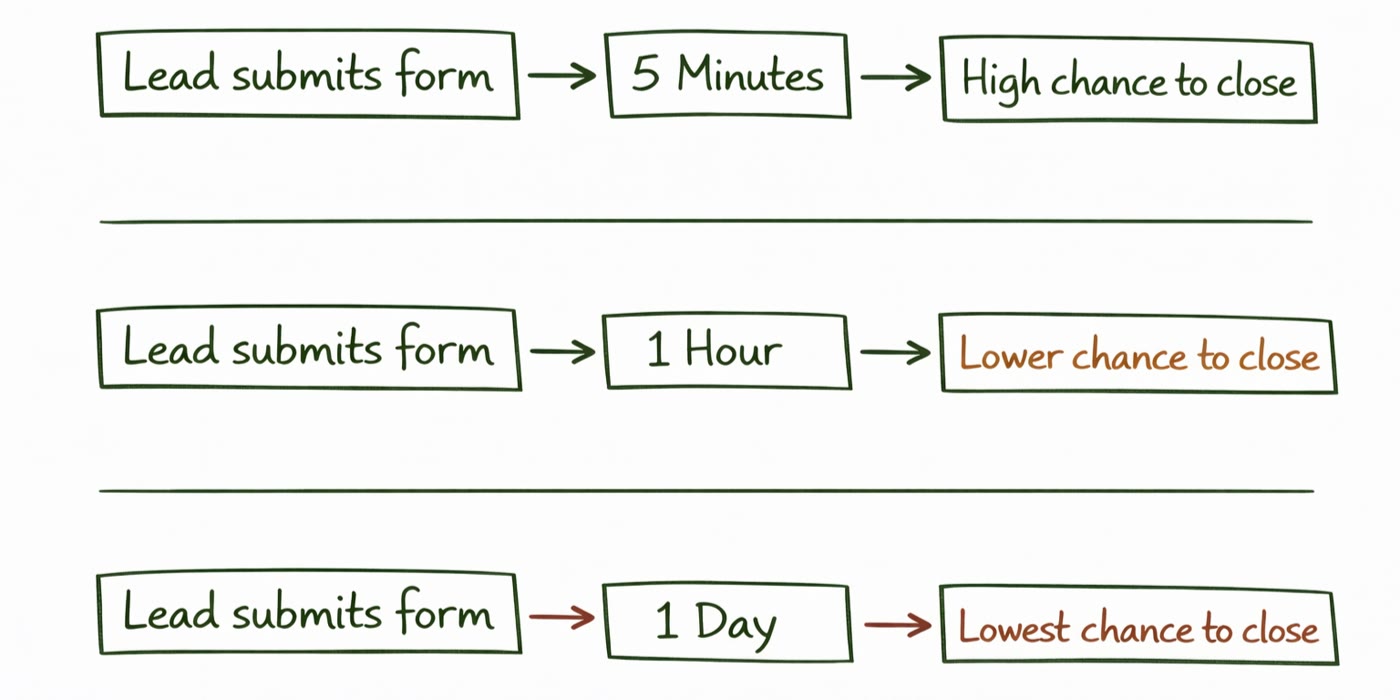
- You can call new leads back within minutes. A Facebook lead wasn't searching for you an hour ago, so their interest cools quickly.
- You can fund it consistently for a few months, since a two-week test tells you very little.
What do our Facebook accounts show about cost and leads?
Across 31 Canadian home service ad accounts our team ran, the typical account paid about $21 per lead (CAD, median of 28 accounts, February 9 to July 6, 2026). Half of accounts landed between about $15 and $32 per lead, and the full spread ran from about $11 to $46 per lead. Most of those accounts are exterior and window cleaning, and the full cost breakdown lives in How Much Do Facebook Ads Cost in Canada in 2026? We don't run Google Ads, so we won't pass off someone else's Google averages as ours.
Cost per lead by month
| Month (2026) | Cost per lead (CAD) | CPM (CAD per 1,000 impressions) |
|---|---|---|
| March | $14.96 | $14.01 |
| April | $17.12 | $15.66 |
| May | $22.15 | $19.10 |
| June | $30.93 | $21.40 |
| July (to July 6 only) | $30.76 | $18.85 |
Source: Meta Ads Manager exports, 31 Canadian home service accounts, lead campaigns only. February was a ramp-up month and is too small to report.
Leads were cheapest in March and April, when exterior cleaning demand was building and few competitors were advertising, and they roughly doubled in cost by June as budgets rose and the season got crowded. That's what we saw in seasonal exterior services rather than a rule for every trade, but if your work is planned and seasonal, starting Facebook ads early in the season is one of the cheapest ways to fill the calendar.
Daily budget and leads per day
| Average daily spend that week (CAD) | Account-weeks | Median leads per day |
|---|---|---|
| Under $20 | 161 | 0.86 |
| $20 to $35 | 109 | 1.43 |
| $35 to $50 | 78 | 1.57 |
| $50 to $80 | 35 | 1.86 |
| $80 and up | 44 | 3.14 |
Source: Meta Ads Manager exports, 31 Canadian home service accounts, February 9 to July 6, 2026, grouped by average daily spend per week.
Under $20 a day, the typical account got a little under one lead a day (about 6 a week). $20 to $50 a day roughly doubled that to 1.4 to 1.6 a day. That's why we'd rather see one channel funded properly than $10 a day on each, and if your budget is small, read Is $10 a Day Enough for Facebook Ads? before you start.
How do Facebook ads and Google ads work together?
Facebook and Google work best together once one of them already brings in steady leads. Google catches the people who are ready today, and Facebook builds a bigger pool of people who will be ready soon, and they connect in three practical ways.
Facebook ads lead to Google searches
Most people who see your Facebook ad won't fill out the form that day, and some come back later by searching your business name on Google. We don't see our clients' Google accounts, so we can't measure this, but you can: in your Google Business Profile performance view, watch searches for your business name after your Facebook ads start.
Retargeting people who already showed interest
Someone who clicks a Google ad, visits your site and leaves without calling is a warm prospect. With the Meta pixel on your site, you can show Facebook and Instagram ads to recent visitors while they compare quotes. On a small budget, put the money into reaching new homeowners first (as our low budget guide for local service businesses explains), and add retargeting once your site gets steady traffic.
Reviews do the closing on both
Whichever ad a homeowner saw first, most will check your Google reviews before they call, and on Google your reviews sit right beside your listing. Asking every happy customer for a review is one of the cheapest ways to make both channels work harder.
Add the second channel once the first gives you a steady cost per lead and you can handle more work.
Should I use Facebook or Google ads? Score your business in four questions
For each question, give one point to the column that fits your business better.
| Question | One point for Google Search if... | One point for Facebook and Instagram if... |
|---|---|---|
| 1. How soon do most customers need you? | Within a day or two, because something is broken or unsafe | Weeks or months ahead, because the job is planned |
| 2. Do people in your area already search for your service? | Yes, lots of people search for it by name | Not many, or homeowners don't know the service exists |
| 3. Can you show the work on video? | No, the work isn't visual or you can't film it | Yes, the result is easy to see and you'll get on camera |
| 4. How do you prefer leads to reach you? | Phone calls you can answer live during the day | Form leads you can call back within minutes |
Then add up your points.
| Your score | Where to start |
|---|---|
| 3 or 4 points for Google | Start with Google Search or Local Services Ads, and add Facebook later for planned work. |
| 3 or 4 points for Facebook | Start with Facebook and Instagram ads, and keep your Google reviews in good shape. |
| 2 points each | Let question 1 break the tie: urgent work starts on Google and planned work starts on Facebook. |
Ticket size is left out because it matters on both platforms the same way: the bigger the job, the more you can pay per lead. To check your numbers, use the worksheet in Are Facebook Ads Worth It for Your Business?
What should you do next?
If you scored for Google, start there. If you scored for Facebook and want to run it yourself, the free Acquirely Academy walks you through the setup at your own pace, with a community where our team and other owners answer your questions.
If you'd rather hand it off, our team writes and edits your video ads, builds your funnel and follow-up, and watches your account every day. You can see how we work with service businesses or apply on our Get Started page, and if Google would suit you better, we'll say so on the call. Our $20,000 lessons post covers what makes Facebook ads pay off once they're running.
Questions
Frequently asked questions
Which is better, Facebook or Google ads, for a small business?
Neither is better for every business. Google usually wins for urgent jobs people already search for, like a burst pipe or a furnace that quit. Facebook and Instagram usually win for planned, visual jobs like decks, painting and exterior cleaning, because they reach homeowners before they search. Start with the one that matches how your customers buy.
Are Google Local Services Ads better than Facebook ads for contractors?
For urgent repair and emergency trades, Local Services Ads are often the better first step, because they show up when someone searches and Google says you pay only for leads related to your business. For planned jobs that few people search for, Facebook reaches far more of the right homeowners. Local Services Ads aren't available for every trade or area, so check Google's help pages first.
Can I run Facebook and Google ads at the same time on a small budget?
You can, but on a small budget we'd fund one channel properly first. In our Facebook accounts, under $20 a day, the typical account got a little under one lead a day (CAD, February 9 to July 6, 2026), so splitting that budget in half leaves both channels with too little data. Get one to a steady cost per lead, then add the second.
Are Facebook leads lower quality than Google leads?
They're usually earlier in the decision. A Google searcher often wants a price today, while a Facebook lead may have been thinking about the job for weeks and just decided to ask. Facebook leads book well when you call within minutes and your form asks a few filtering questions. Slow follow-up is the most common reason they go cold.
Does Acquirely run Google Ads?
No. Our team focuses on Facebook and Instagram ads and the follow-up systems behind them, which is why we've been upfront about our bias in this guide. If your business would do better starting on Google, we'll tell you that on our call. We still encourage every client to keep their Google Business Profile and reviews in good shape, because Facebook leads often check them before they call.
Written by
Brayden Pauls
Co-founder of Acquirely
Brayden co-founded Acquirely with his cousin Ethan after the two of them had to find customers for their own window cleaning business in Ontario. He loves teaching owners how advertising really works, and he writes these guides from what our team sees in the accounts we manage. Acquirely helps small businesses generate leads and customers through paid advertising and practical marketing systems.
More about Brayden and Ethan